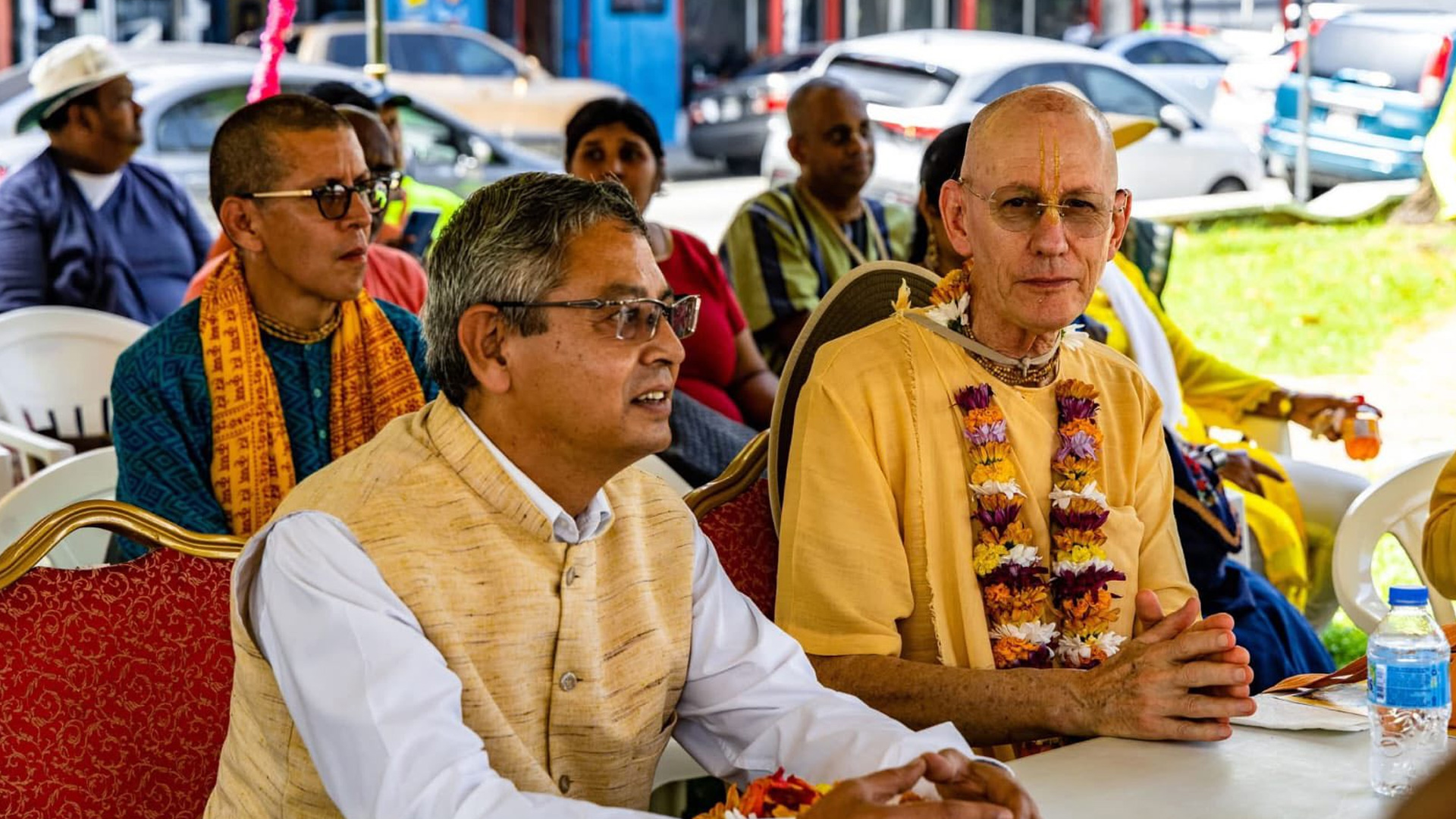
Empirical Impact Analysis
While spiritual advancement is inherently qualitative, the organizational footprint of Guruprasad Swami's leadership yields staggering quantitative metrics. His approach mirrors high-level corporate scaling but relies entirely on volunteer dedication, demonstrating an unprecedented model of non-profit efficiency and cultural integration.
25+
Major Temples & Eco-Villages Established
1.2M
Vedic Texts Translated & Distributed
500k+
Cumulative Meals Distributed Annually
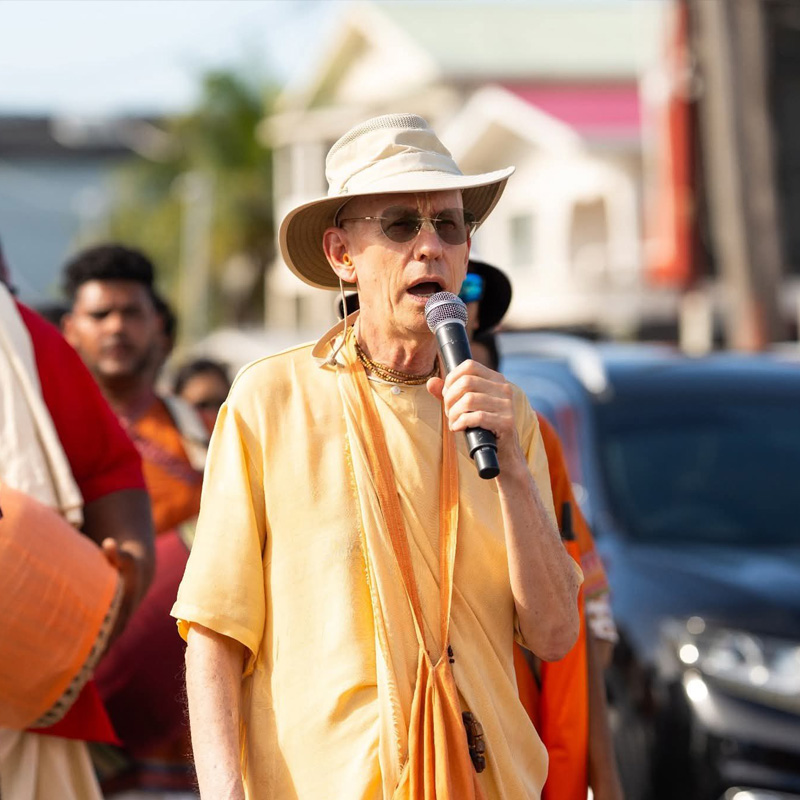
Architectural Oases in Urban Deserts
The establishment of a temple, in Guruprasad Swami's paradigm, is not the creation of a mere place of worship; it is the strategic injection of a 'spiritual embassy' into the heart of materially exhausted urban centers. Spearheading the construction of over two dozen world-class facilities across multiple continents requires immense logistical acumen, cross-cultural diplomacy, and the mobilization of massive volunteer workforces.
These temples functionally serve as multi-disciplinary hubs. They house philosophical academies, cruelty-free agricultural initiatives, indigenous art preservation programs, and community mental health support networks. By securing premium real estate and engineering structures built to last millennia, he has ensured the permanent anchoring of Vedic culture in the Western hemisphere, creating safe havens that neutralize the psychological toll of modern hyper-industrialization.
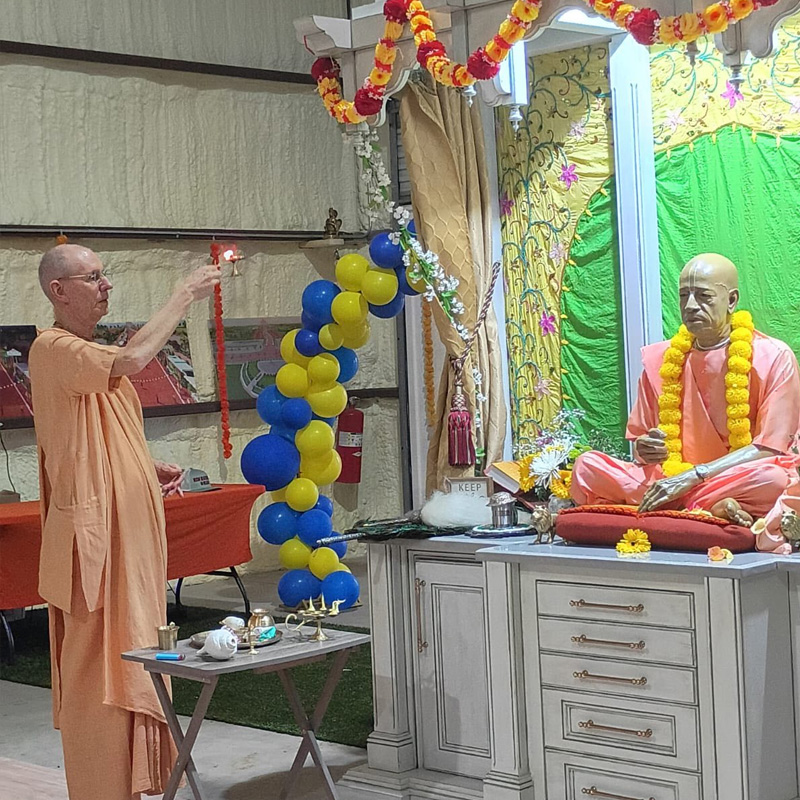
Systematic Vedic Academies
Recognizing that charismatic leadership without systematic education leads to institutional decay, Guruprasad Swami prioritized the founding of rigorous academic institutes. These academies drastically modernized the traditional *Gurukula* (Vedic school) system, synthesizing strict theological study of the *Bhakti-sastras* with modern pedagogical frameworks designed for adult learning.
Under his guidance, curricula were developed to produce graduates who are not only philosophically insulated against material paradigms but are also highly effective communicators, counselors, and administrators. This foresight solved the critical succession problem faced by many new religious movements by institutionalizing the rapid development of competent, philosophically pure middle management.

The 'Prasadam' Lifeline Network
"No one within a ten-mile radius of a temple should go hungry." Operating on this explicit instruction from Srila Prabhupada, Guruprasad Swami scaled local kitchen operations into highly efficient, mass-distribution networks analogous to international disaster relief organizations. The food distributed—referred to as *Prasadam* (sanctified, karma-free food)—is considered both a physical necessity and a spiritual catalyst.
The logistical triumphs behind these initiatives are immense. His teams regularly mobilize rapidly during natural disasters ensuring hot, plant-based meals are distributed to thousands daily. Economically, the cost-per-meal efficiency achieved through volunteer labor and wholesale agricultural sourcing rivals the most optimized NGOs in the world.